





What is a vehicle power inverter and how does it work?
- Understanding Vehicle Power Inverters
- 1. What is a Vehicle Power Inverter and How Does It Work?
- 2. What Are the Different Types of Vehicle Power Inverters?
- 3. How Do I Choose the Right Vehicle Power Inverter?
- 4. How Do I Install and Use a Vehicle Power Inverter?
- 5. What Are the Applications of Vehicle Power Inverters?
- 6. Are There Any Limitations to Using Vehicle Power Inverters?
- 7. How Do I Maintain My Vehicle Power Inverter?
- 8. What Are the Advantages of Choosing Congsin Vehicle Power Inverters?
Understanding Vehicle Power Inverters
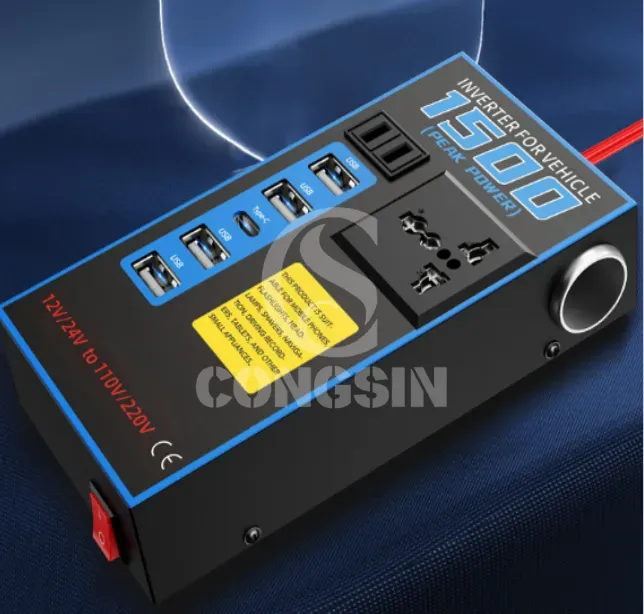
Vehicle power inverters are devices that convert a vehicle's 12V DC (direct current) battery power into 110V or 220V AC (alternating current) power, enabling the use of household appliances and electronic devices while on the road. This conversion is crucial for powering devices such as laptops, mobile phones, and small appliances during travel or outdoor activities.
1. What is a Vehicle Power Inverter and How Does It Work?
A vehicle power inverter functions by taking the DC power from the vehicle's battery and converting it into AC power. The process involves:
Input DC Power: The inverter is connected to the vehicle's 12V DC battery, supplying the necessary power.
Oscillation: The DC power is converted into an alternating DC signal using an oscillator circuit within the inverter.
Voltage Transformation: The alternating DC signal is passed through a transformer, adjusting the voltage to the desired level (e.g., 110V or 220V AC).
Rectification and Filtering: Additional circuits smooth out the waveform to produce a clean AC signal suitable for powering devices.
Output AC Power: The final AC power is delivered through the inverter's output sockets, allowing the connection of various electronic devices.
2. What Are the Different Types of Vehicle Power Inverters?
Vehicle power inverters primarily come in two types:
Modified Sine Wave Inverters: These produce a blocky AC waveform that approximates a sine wave. They are suitable for most electronic devices but may not be ideal for sensitive equipment due to potential interference and inefficiency.
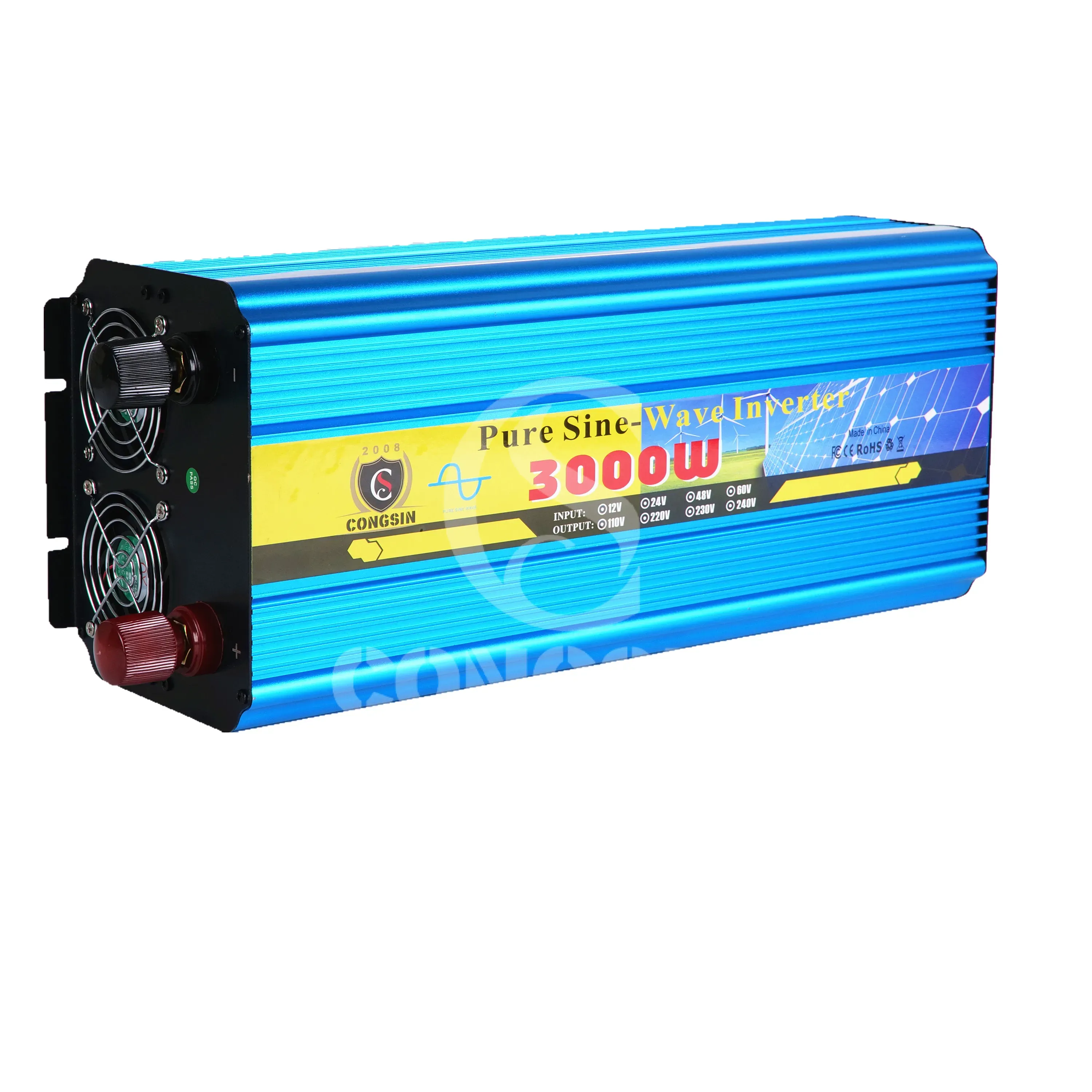
Pure Sine Wave Inverters: These generate a smooth, true sine wave output that closely matches grid power. They are ideal for sensitive electronic devices and appliances, providing cleaner power and reducing the risk of damage.
3. How Do I Choose the Right Vehicle Power Inverter?
When selecting a vehicle power inverter, consider the following factors:
Power Requirements: Determine the total wattage of the devices you intend to power. For instance:
Mobile phone/laptop charging: Inverters with less than 150W capacity are sufficient.
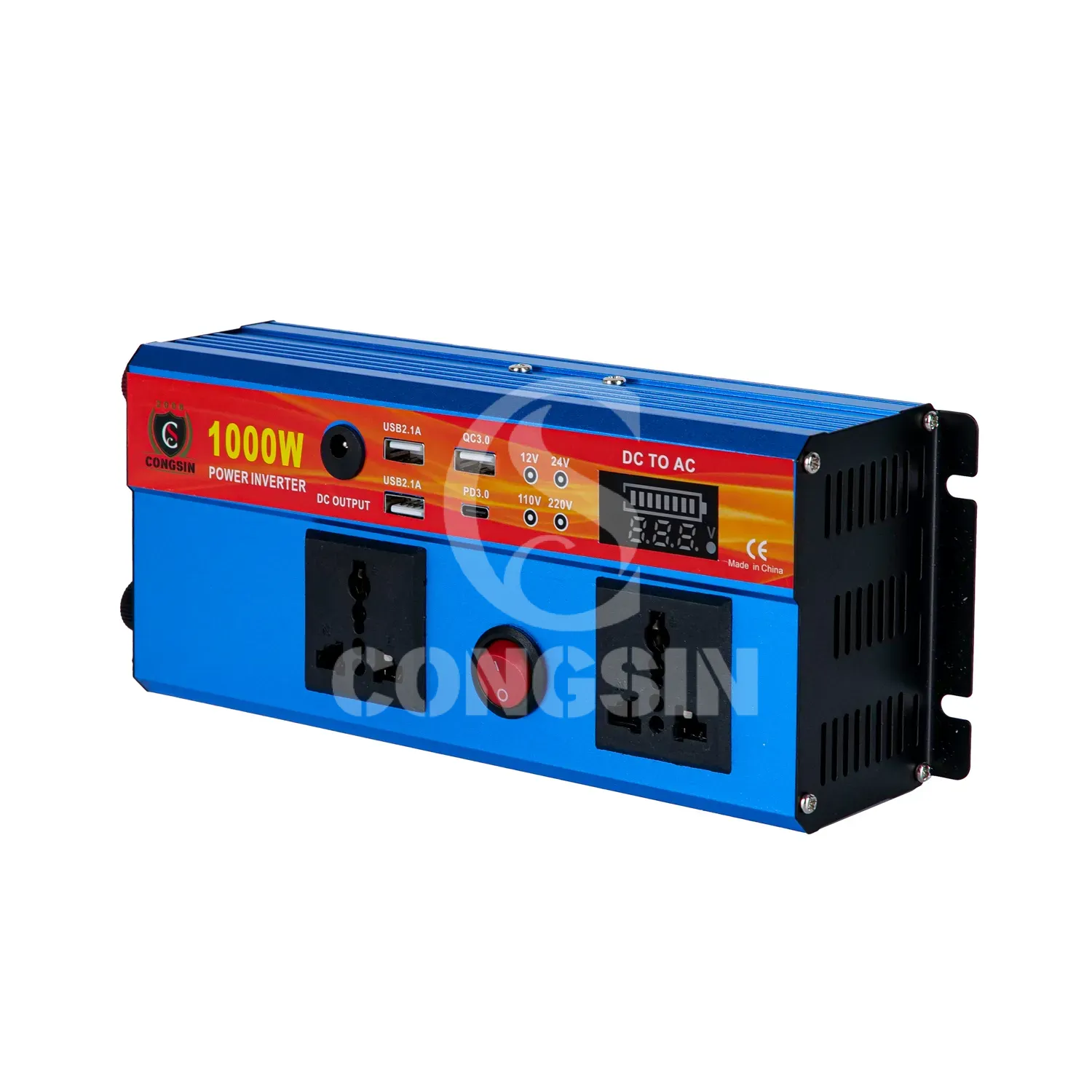
Medium power devices like rice cookers and electric kettles: Inverters ranging from 300W to 1000W are appropriate.
High power equipment such as air conditioners and power tools: Inverters exceeding 1000W are necessary.
Voltage Compatibility: Ensure the inverter's input voltage matches your vehicle's battery voltage (typically 12V for cars and 24V for trucks). The output voltage should align with your device requirements, such as 110V (U.S. standard) or 220V (European standard).
Waveform Type: Choose between modified sine wave and pure sine wave inverters based on the sensitivity of your devices and the quality of power required.
Safety Features: Look for inverters with built-in protections like overload, short circuit, and overheat safeguards to ensure safe operation.
4. How Do I Install and Use a Vehicle Power Inverter?
Installation and usage guidelines include:
Connection Methods:
Cigarette Lighter or 12V Accessory Socket: Suitable for low-power inverters (up to 150W). Simply plug the inverter into the socket.
Direct Battery Connection: For higher power requirements, connect the inverter directly to the vehicle's battery using appropriate cables and terminals. This method provides a stable power supply but requires careful handling to prevent short circuits.
Safety Precautions:
Always ensure the inverter is turned off before connecting or disconnecting devices.
Use fuses or circuit breakers to protect against overcurrent situations.
Regularly inspect cables and connections for wear or damage.
Avoid overloading the inverter by exceeding its rated capacity.
5. What Are the Applications of Vehicle Power Inverters?
Vehicle power inverters are versatile and can be used in various scenarios, including:
Traveling: Powering devices like laptops, GPS units, and entertainment systems during long trips.
Camping: Operating small appliances such as portable refrigerators, lights, and cooking equipment.
Emergency Situations: Providing power to essential devices during power outages or in remote locations.
Work Sites: Supplying electricity to power tools and equipment in areas without access to a traditional power source.
6. Are There Any Limitations to Using Vehicle Power Inverters?
Yes, there are several limitations to consider:
Battery Drain: Using an inverter while the vehicle is off can rapidly deplete the battery, potentially leaving you unable to start the vehicle.
Power Limitations: The vehicle's alternator and battery have finite capacities. Overloading the inverter or using high-power devices can strain the vehicle's electrical system.
Heat Generation: Inverters can generate significant heat during operation. Ensure proper ventilation to prevent overheating and potential damage to the inverter or surrounding components.
7. How Do I Maintain My Vehicle Power Inverter?
Proper maintenance includes:
Regular Cleaning: Keep the inverter's vents and cooling fans free from dust and debris to ensure efficient operation.
Inspection: Periodically check for signs of wear, damage, or corrosion on cables and connectors.
Storage: When not in use, store the inverter in a dry, cool place to prevent damage from environmental factors.
Firmware Updates: If applicable, keep the inverter's firmware updated to benefit from the latest features and performance improvements.
8. What Are the Advantages of Choosing Congsin Vehicle Power Inverters?
Congsin offers several advantages in their vehicle power inverters:
High Efficiency: Designed to minimize energy loss, ensuring more power is available for your devices.
Durability: Built with quality materials to withstand the rigors of travel and outdoor use.
Advanced Safety Features: Equipped with multiple protection mechanisms to safeguard both the inverter and connected devices.
User-Friendly Design: Easy installation and operation, making it accessible for users of all technical levels.
Comprehensive Warranty: Provides peace of mind with robust warranty coverage and customer support.
By understanding the functionality, types, and considerations associated with vehicle power inverters, you can make informed decisions that align with your specific needs and ensure reliable power supply during your travels and activities.
Sources:
(https://www.inverter.com/what-is-a-car-inverter-and-how-does-it-work)
(https://www.topbullshop.com/blogs/solar-energy-basics/how-does-a-power-inverter-work-in-a-car)
(https://www.xindun-power.com/faq/what-is-power-inverter-for-vehicle.html)
(https://dev.thetechedvocate.org/understanding-car-power-inverters/)
(https://punchng.com/understanding-how-car-power-inverters-work/)


Modified Sine Wave Inverters
Which types of batteries can it be used with?
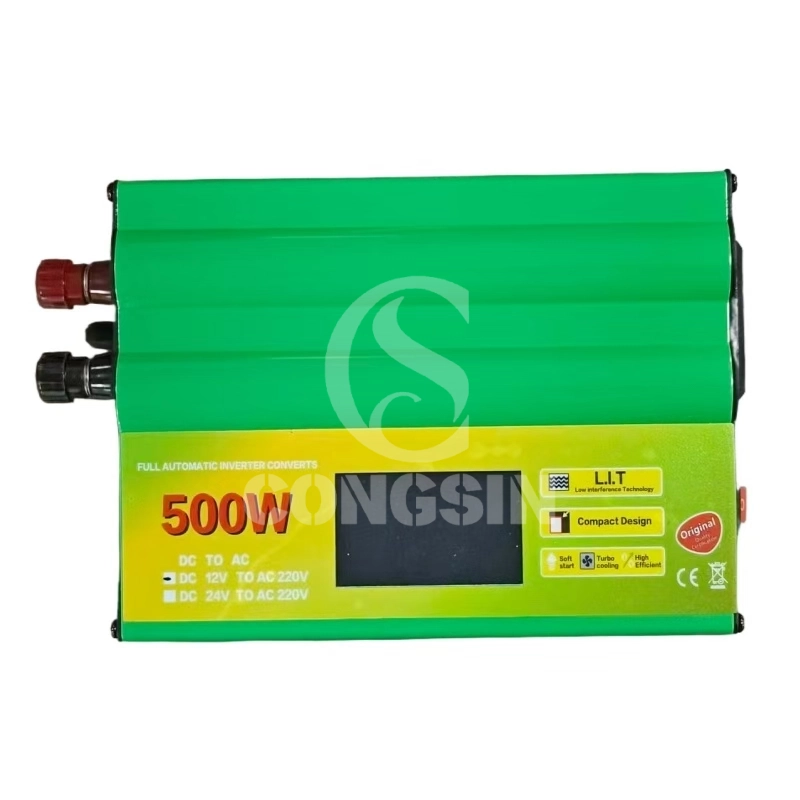
It is suitable for common DC batteries such as 12V lead-acid batteries and lithium batteries. Please ensure the battery voltage matches the inverter's input voltage before use.
Does it only support DC12V input voltage?
The regular model has DC12V input, and other input voltages such as DC24V can be customized. Please consult customer service for details.
Can it drive a 3000W air conditioner?
Yes. Air conditioners have instantaneous power during startup (about 2-3 times the rated power), and this product has a peak power of 6000W, which can meet the startup and operation needs of a 3000W air conditioner; the battery capacity must be ≥150Ah to ensure continuous power supply.
Can other input voltages be customized?
Yes, the regular is DC12V, and DC24V, etc. can be customized. Please consult customer service for details.
Products
Can I customize the logo?
Yes, OEM/ODM service is available.
Get in Touch with Our Team
You can also communicate with us directly through our online contact form. Please fill in the following information, and our team will contact you as soon as possible after receiving your message.

CONGSIN is a trusted OEM factory for power inverters, solar charge controllers, and DC converters. Reliable solutions for global B2B buyers.
 High Quality
 7/24 Service
 Guaranteed Warranty
© 2025 Congsin. All Rights Reserved.